

False Spring
Slow Emergence in Symbolic Time

The vernal equinox is undoubtedly a time of emergence. We gratefully welcome the arrival of Spring, however, here in the East of Canada where I live, we have what we fondly call a “false spring.” This is a week when temperatures rise, songbirds return, and we get the first peek of earth from under melted snow. It’s hard to understate how optimistic we all become. We feel excitement stirring in our bellies for life returning with the increase in light. We put away our snow boots and bulky coats, and let ourselves believe in the expansive relief of warmth again.
But inevitably, a cold front moves back in, bringing with it a sharp redux of winter, sparing us no punishments of more ice and snow.
I can’t help but think of psycho-spiritual emergence in much the same way. As our tiny shoots of aliveness, recovery, and creativity push up through the cold ground of gestation, they catch their first glimpse of big dreams coming true. They want to push and race with the growing energy of the time, forgetting their vulnerability. Still tender with exhaustion and disbelief, we brave ourselves back into the world. But any sudden frost or unexpected snow can bury us before we barely begin.
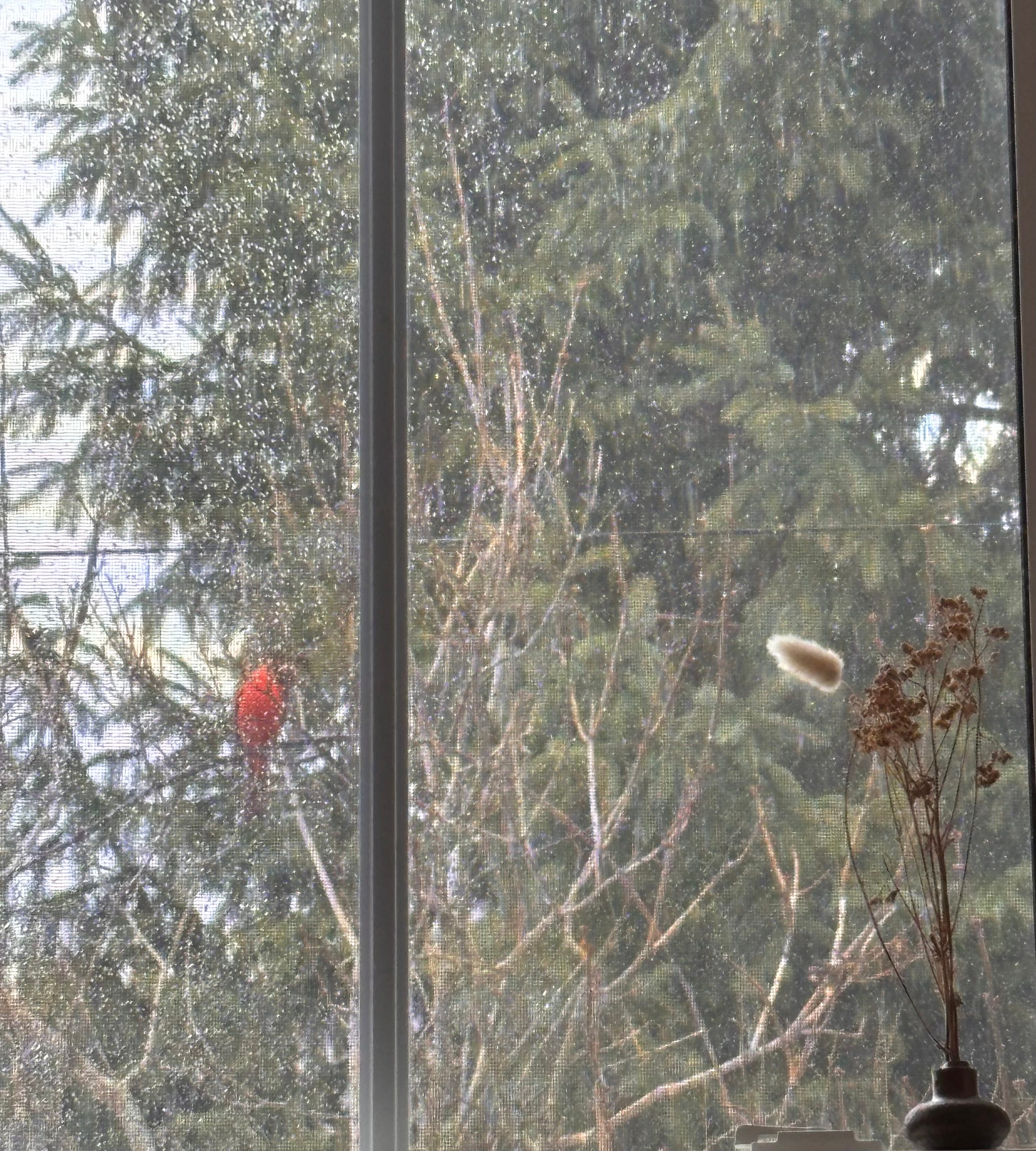
The frost in this metaphor is what we could broadly call resistance. It is what keeps us stuck, but it is also a guardian. As much as we may want to leap into the capacities of our next becoming, we often have to acclimate through a series of small contractions and expansions. What if resistance is not what prevents transformation, but what makes it possible?
Naturally, we want to rush into that first feeling of aliveness, but in order to do that in a sustainable way, we have to meet, name, and unhinder ourselves of our resistance to that growth—something that rarely happens on the timelines we’re used to.
This pattern of emergence and resistance is archetypal and can be found in some of our oldest stories. In the Hebrew calendar, the equinox arrives in the first month of the year, Nissan, which is also the month of Passover. In the Jewish faith, Nissan marks a kind of double-liberation—seasonal and spiritual—from the narrows of winter, and the shackles of slavery in Egypt.
I’ve always found it fascinating that the wilderness journey in Exodus took the Israelites 40 years to complete, yet the same journey taken by Jacob’s sons in Genesis took roughly weeks, if not days. What appears to be a short distance in physical terms can become an epic journey when it requires a transformation in consciousness. Especially when that transformation means changing personal, cultural, or even civilisational patterns. The wilderness, then, is not a delay in the journey, but a migration that happens on a different time-scale—the time it takes to remake one’s symbols, to become someone who can finally arrive.
What appears to be a short distance in physical terms can become an epic journey when it requires a transformation in consciousness.
We all have this edge-place, like a winter that won’t quit, around our inclination to grow. This frozenness keeps us stuck in some area of our life. Even when we know, on some level, that we are inhibited by that resistance to change, we may acquiesce to it like an inevitability. Until something moves into our path to disrupt that pattern: a rupture, a shock of contrast, or even a slow accumulation of dissonance that reveals how narrow our lives have become.
We can see how the long wander through the desert is not about physical distance, but a form of slavery to our limitations. How comfortable it can feel to repeat our old habits and complaints of not-enoughness, even as they reinforce our constraints, cause us to miss the miracles before our eyes, and blind us to the abundance on the horizon.
Recently, my husband and I decided to make some small home improvements. We didn’t actually add much to our home so much as clear out unnecessary clutter. We were both surprised by how much this editing process allowed our space to open up and shine. It was viscerally liberating to my body to be able to move more freely around the space. Even my vision could travel peacefully from one end of the room to the other without getting caught on visual complications.
Paradoxically, it was only after the space had been cleared that I realised that I’d been bracing, feeling chronically obstructed. What I had accepted as the only configuration possible was actually constraining me in ways I had stopped noticing.
It got me thinking about how the body adapts to constriction, making our blocks nearly invisible to us, until something serves to shine a light on them. I believe our perception works in much the same way. We acclimate to the constricted way we perceive things, even mistaking our perception for reality itself, until something opens up our perspective.
It’s easy to cast freedom and restraint as opposites—good and bad—but they are partners in creation. As Confucius once said, “The intercourse of heaven and earth alternates between abundance and scarcity.” In other words, liberation and constraint are in a constant dance, and it is their tension that gives rise to the novelty of life itself. Wind instruments require narrow apertures to make music, water needs the banks of earth to become a river, and snow slows life into dormancy so it can marshall its resources.
Our constraints are what provoke longing for change, and reveal where we haven’t been living from the deeper pattern for our lives. But only when we can see them. Otherwise, we organize ourselves around those resistances, mistaking them for who we are.
We organize ourselves around our resistances, mistaking them for who we are.
Even though scarcity and abundance coexist, we can fall into the trap of waiting for something to intervene, to deliver us from hardship—forgetting that reality is participatory, and that we always have a choice to act as if the dream of freedom is true, even before it is confirmed in our experience.
When we relate to what I call “symbolic time,” we pull back our microcosmic focus from the physical journey into a broader field of meaning. Instead of trying to control the events of our lives, we turn to the tools and practices that help us to see and clear our obstructions, so that we can listen.
For many, that quiet internal temenos is cultivated through journaling, movement, dreamwork, time spent in nature, prayer, and ritual. Whatever your tools, they serve to remind you that you are not only on a human path, but also on an imaginal journey.
In that remembering, like manna from heaven, we are resourced each day. We return to our deepest commitments in this life, and learn to participate in the reciprocal energy that sustains them. From there, we can move into life trusting our slow emergence, even when conditions suggest otherwise. We can be sure that spring will return, even during the final frost.
In this way, liberation must be continually enacted.
Did you write this specifically for me? 🥹 Thank you as always for your wisdom and generosity in sharing it. 💛
"Even though scarcity and abundance coexist, we can fall into the trap of waiting for something to intervene, to deliver us from hardship—forgetting that reality is participatory, and that we always have a choice to act as if the dream of freedom is true, even before it is confirmed in our experience."
This one resonated with me to the core. I feel like my life lately has been living evidence of the above quote. I am living on the road for the first time in a little trailer with my cat, supporting us by writing and selling my jewelry and art. It's been quite a leap of faith, and there have been lots of challenges, not the least of which has been facing intense fear and self-doubt about my art and my choice to live this way. My anxiety has been crippling at times and I've been surprised at how deep my conditioning about scarcity goes, and how easily fear of running out of money can push me into old patterns of striving, instead of enjoying the process of and trusting that if I follow my inner truth, things will work out.
But I'm getting better at trusting, and balancing work with rest and receptive time, and my outer circumstances are starting to reflect that. It almost felt like there was an initiatory gap where I had to live in a state of lack for a while, so that I could become strong enough to believe in my art and this path I've chosen. And now all of a sudden I'm getting new subscribers and my art is selling, and the more I relax into this life, the better it seems to go.
These Dreamspeak posts, along with your book, Belonging, have been a lighthouse on this journey, especially in the sense of providing much needed affirmation and support, reminding me that I'm on the right track, and to keep going, keep trusting, so thank you. And happy spring!❤️🦋🌱🐞