

The Passenger Seat
Metaphors that Shape Our Lives

I’ve been thinking a great deal about the images we carry. How they shape us until they become the lens through which we see and meet the world.
We usually think of an image as a visual or mental picture. But in the Jungian sense of the word, an image is the form that our psychic reality takes.
These images are often invisible to us, because we live inside them—like architecture—so we can’t look at them directly as we would, say, a painting or storybook. But we are deeply affected by their structures nonetheless. Like a creaky floorboard we keep stepping on, the image organises us somatically—shaping us without our noticing.
For example, when we say life is “a battlefield,” it isn’t just a figure of speech. We reach for the analogy that parallels our inner experience. We may feel embattled by the events of our lives, go into the world armoured and ready to defend our ground, or end the day feeling defeated. But do we really choose the battlefield metaphor, or did it choose us?
Are we passive—inescapably possessed by these patterns and archetypes—or do we have some say in how we participate with the images in our field of meaning?
One of the only times that these images are exposed is when we dream.
The problem is that when you are dreaming, you fall under the illusion that those images are a fixed reality. You forget that the world of symbols is fluid, open to negotiation, and responsive to your intent. But mercurial as they may be, that doesn’t mean your images don’t have weight.
Symbols are real in every sense that matters: they can restrain you while you’re inside them.
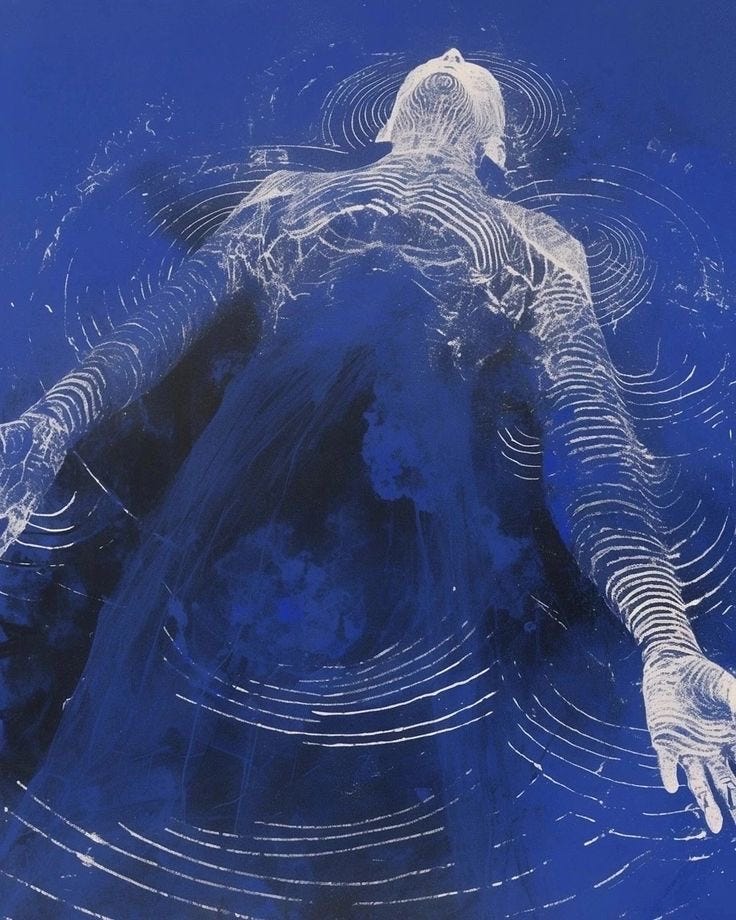
For example, let’s say you dream of being in a house with a crumbling floor. You don’t experience it as symbolic—the decay, neglect, and instability are every bit as real to you as anything in waking life. The ground giving way beneath you, the loss of something familiar you once loved.
Now when you wake up, the crumbling house image is gone, but you still feel a vague panic that you can’t quite locate: a sensation of something reliable in your life falling away.
Whatever gave rise to the crumbling floor may not be within your control. But perhaps you do have some say in how you respond to that change.
The simple act of remembering your dream is an assertion of agency. Even if you do nothing more than notice your images, it sets consciousness in motion. Like moving from the back of a car to the passenger seat, it changes your relationship to the images that drive you.
While you’re inside a belief, it just looks like your reality. But a dream casts the construct outside you, gives it a face, a body, a voice. It substantiates it into a form that you can investigate, and even argue with. Suddenly the thing you’ve been standing inside of is sitting across from you, separate enough to finally see.
Suddenly the thing you’ve been standing inside of is sitting across from you, separate enough to finally see.
If you take this one step further, by noticing patterns and recurring elements across a series of your dreams, you can begin to see the larger arcs of development in your mythic story.
You may not get to choose whether an image organizes you, but you can change your relationship to it. At first dreamwork is just a process of witnessing — but with practice, it becomes something closer to negotiation. When you reflect on what your images have to teach you, you begin to push at their contours. As you choose different attitudes or behaviours, so too do the images shift. You are participating in changing their shape.
Maybe you still go into the world armoured tomorrow; defensive and ready to battle. Or maybe you receive a dream that reveals your enemy is vulnerable, even tragically wounded. The new image arouses your compassion and causes you to question if you’re even on a battlefield at all. Maybe the next day, you hold yourself with more compassion and it changes the way others begin to interact with you. You have a sudden flood of awareness that life isn’t just happening to you, you are happening to life.
Thank you for describing beautifully what I have experienced since journaling my dreams and synchronicities. I have learnt so much about my hidden self, often proving to be the elephant in the room of my unconscious! Bringing the unconscious into conscious awareness where it can be acted upon, or not.
Thank you. I have vivid imagery during therapy/ parts work that presents itself. Is there a difference between that and dream imagery?